

Education Hub
Tensile Testing for Teaching Labs

Hands-on labs are where students connect theory to real mechanical behaviour. This Education Hub is built for flexural, compression, and tensile testing for teaching labs in biomaterials, biomechanics, and materials science programs, with curriculum and workflows that produce clean, repeatable datasets students can analyze in a single lab period or across a multi-week module.
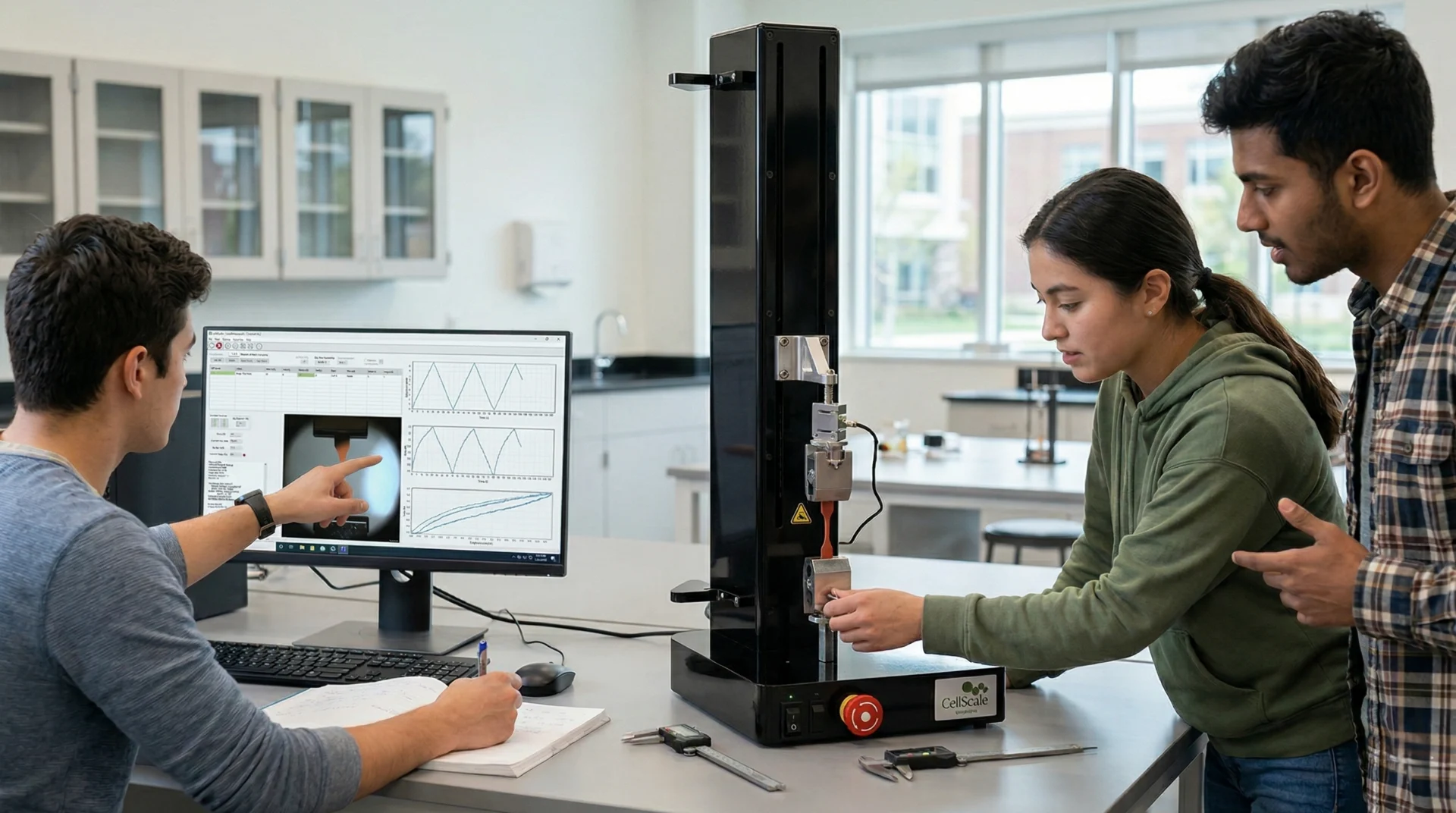
The core offering is the UniVert Classroom Kit, a mechanical testing lab kit that supports tension, compression, and bending labs using a UniVert mechanical testing instrument with curriculum designed for student use.
Drag to move map

Tensile Testing for Teaching Labs in Undergraduate Courses
In many undergraduate courses, tensile testing is the first mechanical test students run because the inputs and outputs are easy to follow in real time. Students record force and displacement, convert to stress and strain, and then extract practical quantities such as stiffness, yield behaviour, ultimate strength, and energy to failure. The same dataset also gives you room to talk about specimen-to-specimen scatter, nonlinear response, and why material structure matters in biomechanics and biomaterials.
Common Applications
This classroom approach is widely used in undergraduate biomaterials labs, biomechanics teaching labs, and mechanics of materials courses. It is also a natural fit for student biomechanics testing assignments that require students to compare conditions, quantify uncertainty, and write a short technical report based on experimental evidence.
Many instructors also connect our biomaterials education system module to real research examples, so students see where the same measurements show up outside a compression testing lab or a basic tensile lab.
A Biomaterials Education System Built Around Hands-On Mechanical Testing
A biomaterials education system works well when students can set up a test and focus on what the curves mean rather than on fixing the setup. For the platform, that means reliable alignment, straightforward fixturing, and software that makes it easy to collect clean force and displacement data.
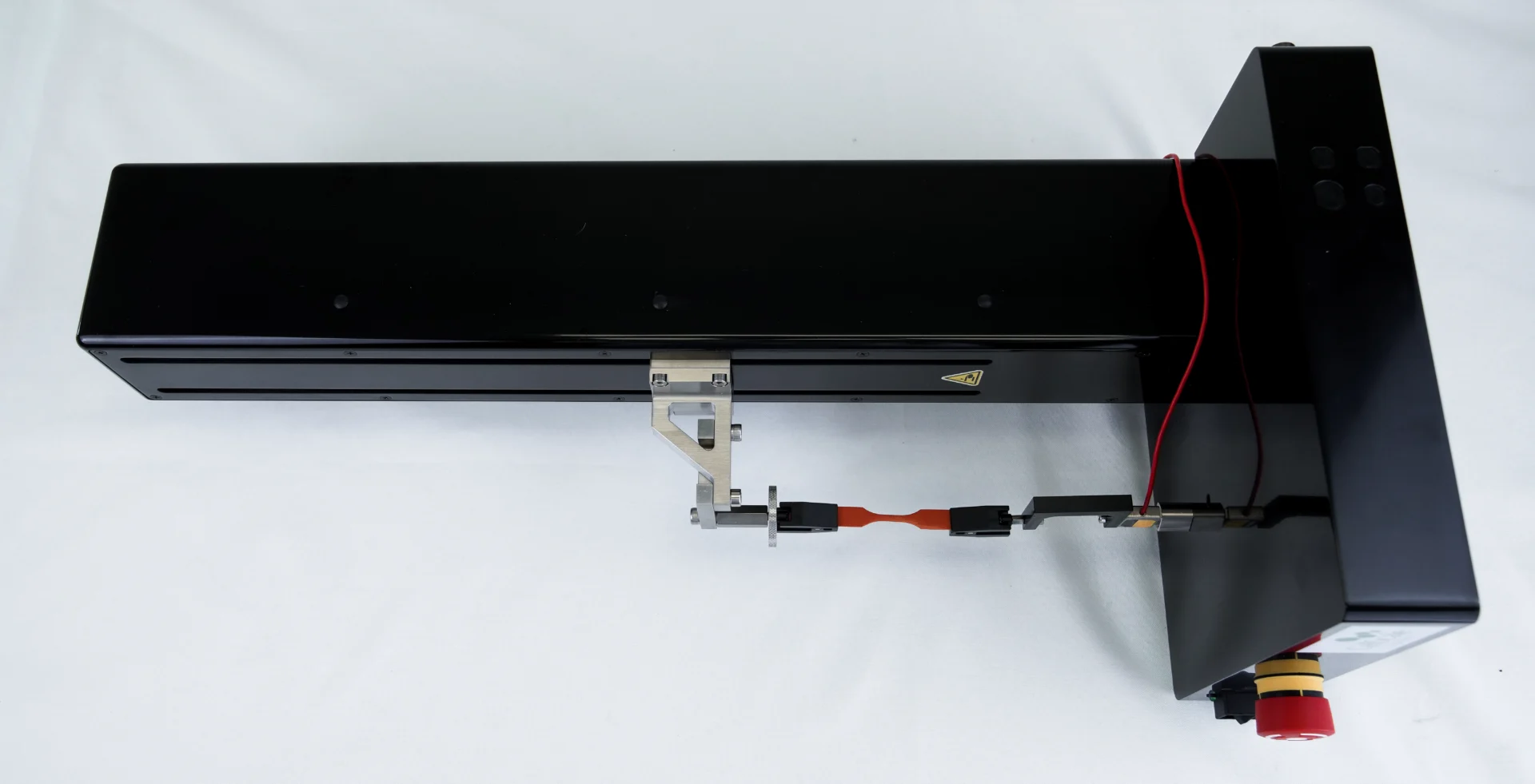
UniVert classroom mechanical testing instrument students can run confidently
The UniVert platform is commonly adopted as a classroom mechanical testing instrument because the workflow is approachable for students while still behaving like professional mechanical testing equipment. Students learn how grip selection, specimen geometry, and test speed influence the output, without needing extensive supervision for every step. When your lab needs to scale across multiple student groups, a classroom mechanical testing instrument should minimize setup time and maximize repeatability.
If you want to review the underlying system used for the classroom kit, see the UniVert mechanical testing system.
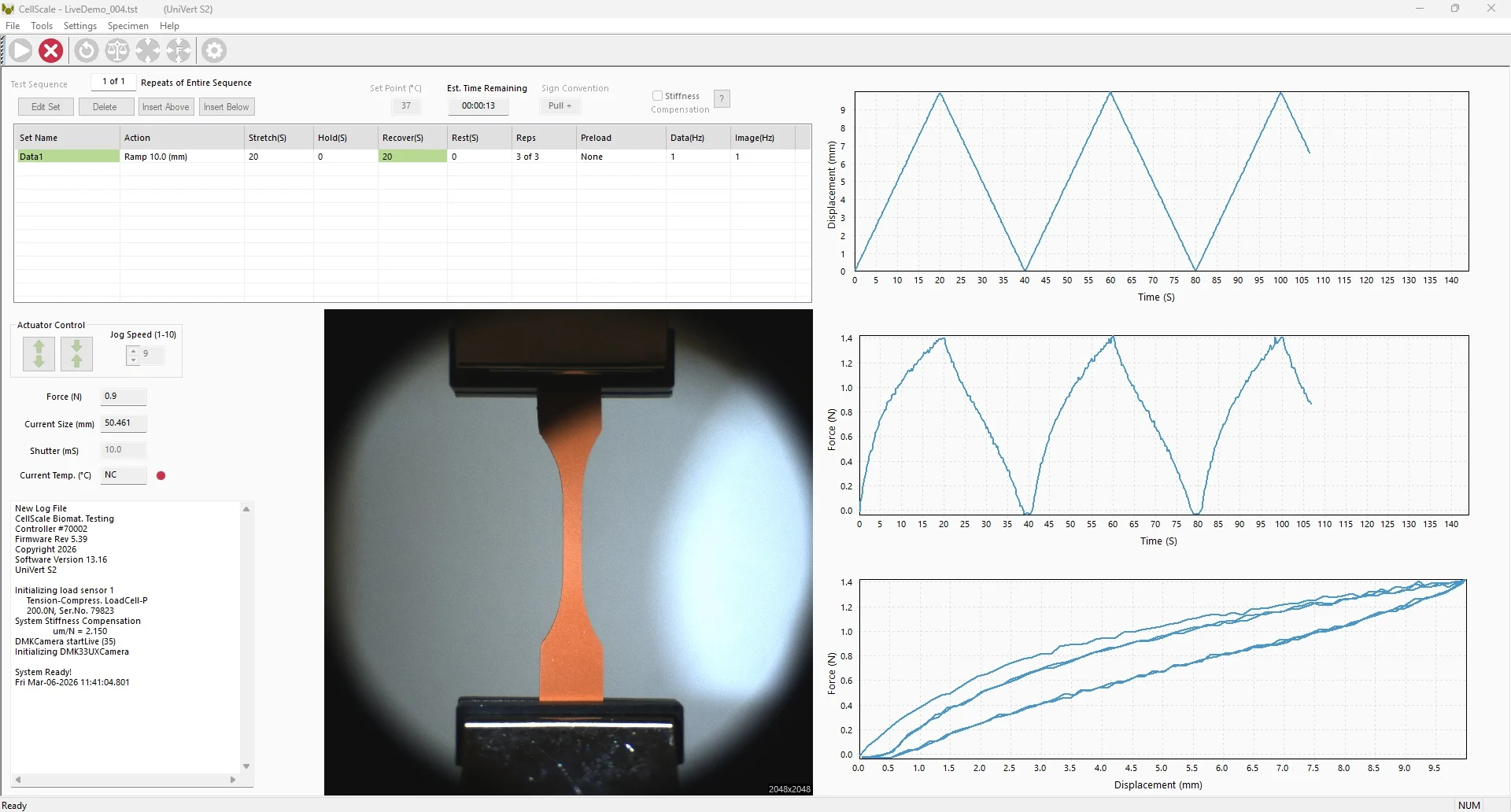
From raw force and displacement to stress strain learning objectives
In a biomechanics and biomaterials education system, data collection is only half the story. Students need to convert raw measurements into stress and strain, then interpret the resulting curves. This is where tensile testing for teaching labs becomes a powerful teaching tool: students can identify linear regions for modulus estimation, recognize yield behaviour, compare ultimate strength between conditions, and relate curve shape to brittle versus tough behaviour. Those same analysis patterns also translate well to compression and bending modules, reinforcing the idea that mechanical testing is a family of methods, not a single test.
From an Educational Tensile Tester to Multi-Method Labs
An educational tensile tester is most effective when it supports more than one learning objective. While tensile testing for teaching labs is the standard entry point, students learn faster when they can compare tension, compression, and bending on related materials and geometries. This is the rationale behind the UniVert Classroom Kit curriculum.
Compression Testing Lab
Concepts for soft materials and structural surrogates
A compression testing lab helps students understand how geometry and boundary conditions change measured mechanical response. In compression, students can examine yield behaviour and failure modes that differ from tension, and they can compare how specimen shape and aspect ratio influence the resulting curves. Compression modules also connect naturally to biomechanics examples such as contact loading and load distribution in tissues and engineered constructs.
Three Point Bending Lab
Workflows for beam behaviour and bone mechanics
A three point bending lab introduces the idea that a single loading scenario can produce tensile and compressive regions at the same time. Students learn that failure often occurs in the weaker mode, and they see how beam geometry influences stiffness and strength. Bending workflows also provide an intuitive bridge to bone mechanics and lever arm concepts that appear frequently in student biomechanics testing courses.

Courses and Teaching Labs That Benefit Most
The UniVert Classroom Kit and broader CellScale educational tools are most often used in university-level teaching labs where students are expected to run experiments and interpret results using engineering fundamentals. Typical courses include:
Undergraduate Biomaterials Lab Modules
Students compare soft materials, tissue analogs, or polymeric specimens and relate curve shape to structure and composition. Tensile testing for teaching labs is the first lab because it enables clear comparisons and supports discussion of nonlinear behaviour.
Biomechanics Teaching Lab Modules
Students focus on interpreting mechanical function in biologically relevant contexts, comparing tension, compression, and bending as complementary approaches. These modules are a natural fit for student biomechanics testing projects.
Mechanics of Materials and Materials Characterization Labs
Students reinforce core concepts such as Young’s modulus, yield, ultimate strength, and work to fracture, then explore how geometry and boundary conditions affect measured response.
If your teaching labs also discuss mechanosensitive responses or the link between mechanics and device function, you may also find relevant context in Mechanobiology and Bioelectronics.
Featured Educational Tool:
The UniVert Classroom Kit

The UniVert Classroom Kit is a mechanical testing lab kit designed for educators who want students to learn core mechanical testing principles through hands-on experiments. It uses the UniVert classroom mechanical tester to support a structured pathway that begins with tensile testing for teaching labs and then expands into compression and three point bending lab modules.
The kit is built to reduce instructor overhead while keeping the student experience rigorous. It includes guided student and instructor materials, fixtures for common methods, and specimen options that support repeatable data collection and clear comparisons between conditions.
Lab Resources and Teaching Support
To support implementation in real courses, the CellScale education pathway includes lab-ready resources that fit a biomaterials education system approach: student guides, instructor notes, and structured analysis and reporting expectations. Many instructors start with tensile testing for teaching labs and then add a compression testing lab and a three-point bending lab later in the term.
Resources:
FAQs
What specimens work well for tensile testing for teaching labs?
Our modules for tensile testing for teaching labs is setup to run on polymeric sheets, elastomers, tissue analogs, and other compliant materials where students can prepare consistent geometries and observe failure in a controlled gauge region. Specimen geometry and consistent measurement of cross-sectional area are key to producing comparable stress-strain curves.
What education level is the UniVert Classroom Kit designed for?
It is aimed at undergraduate teaching labs that cover mechanical testing fundamentals in biomechanics. It can also be used in community college, engineering technology programs, or advanced engineering tracks in high school, where students run comparisons and write short technical reports.
How much supervision is typically needed in a student biomechanics testing lab?
In most student biomechanics testing labs, one demonstration is followed by small-group runs, with instructors checking specimen setup and alignment and then spending most of their time on interpretation and reporting.
Can we align these labs with our program outcomes?
Many teaching labs use our tensile testing for teaching labs, compression modules, and bending modules to support outcomes related to experimental design, data analysis, and the use of modern engineering tools. The UniVert Classroom Kit materials are structured to support common accreditation-driven outcomes while still allowing instructors to adapt the emphasis to their course goals.
Talk to us about your teaching lab goals
If you are planning a new lab module or updating an existing course, we can help you select the right setup for tensile testing for teaching labs and determine how to integrate compression and bending modules over a term.
