

Skin Biomechanics
and Wound Healing Research

Overview of Skin Biomechanics and Wound Healing
Skin is a complex, multi layered tissue with nonlinear mechanical behaviour driven by collagen fibre orientation, hydration state, and extracellular matrix remodeling. Its ability to resist tension, shear, and repeated deformation is essential for protecting underlying tissues and supporting physiological motion.
- Skin biomechanics research often focuses on:
Wound healing dramatically alters these mechanical properties. During inflammation, proliferation and remodeling phases, the extracellular matrix undergoes structural changes that affect strength, stiffness, and failure modes. Engineered skin substitutes and dermal scaffolds must replicate these properties to function effectively in grafting or regenerative therapies.
Importance of Mechanical Testing in Skin and Wound Healing
Mechanical characterization allows researchers to evaluate biological function and assess whether engineered tissues can withstand physiologic loads.
Researchers use these methods for:
- Measurement of tensile strength and stiffness in healing or scarred tissue
- Evaluation of graft materials, dermal scaffolds and engineered skin substitutes
- Quantification of viscoelastic recovery and time dependent behaviour
- Shear and peel resistance analysis related to wound closure and adhesion
- Assessment of collagen remodeling and fibre alignment
- Comparison of native and regenerated tissue performance
These measurements help predict clinical functionality and guide biomaterial design.
Recommended CellScale Instruments Skin and Wound Healing Research
UniVert
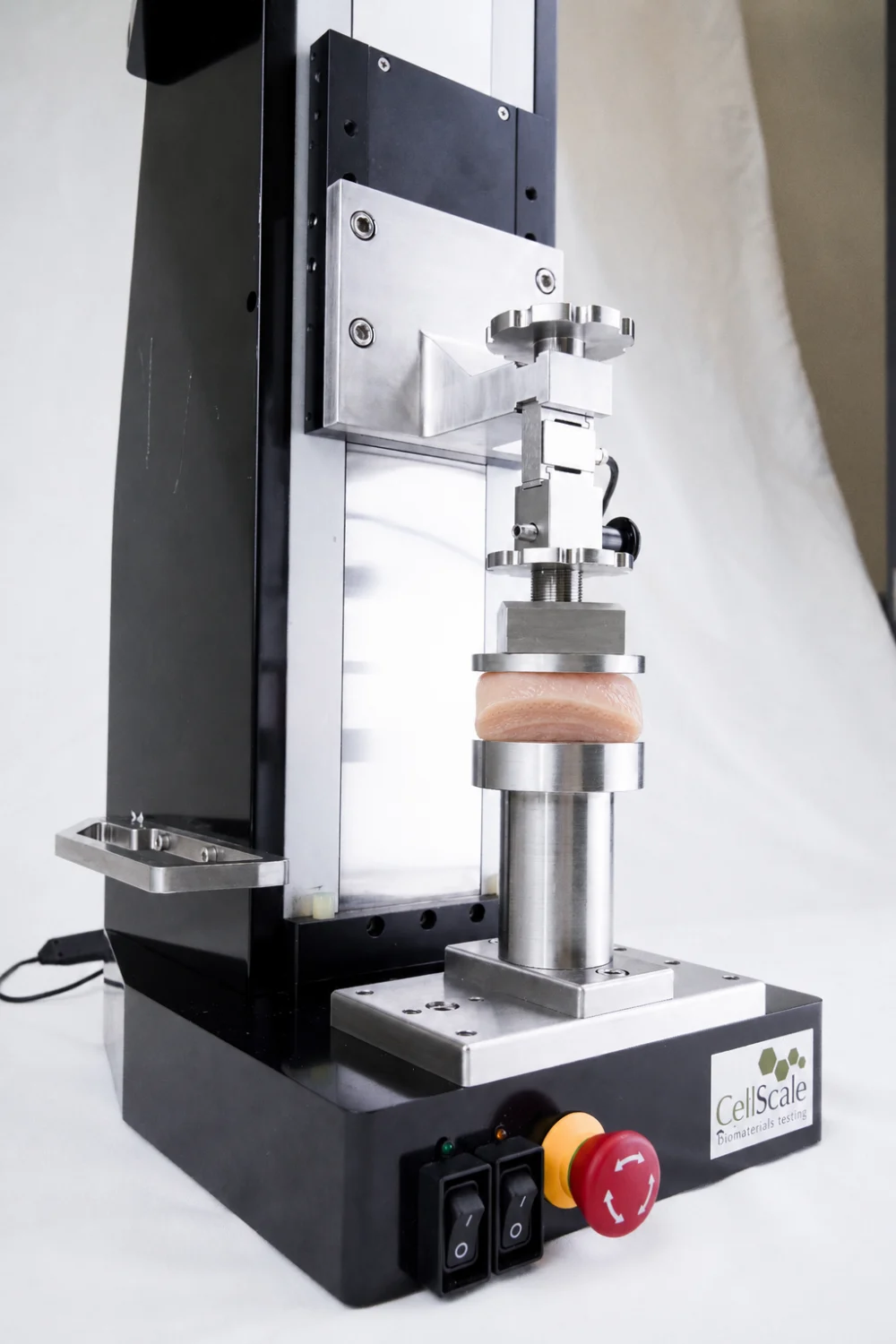
Used for tensile, compression, and shear testing of skin strips, dermal scaffolds, and engineered skin constructs over a wide stiffness range.
MicroTester
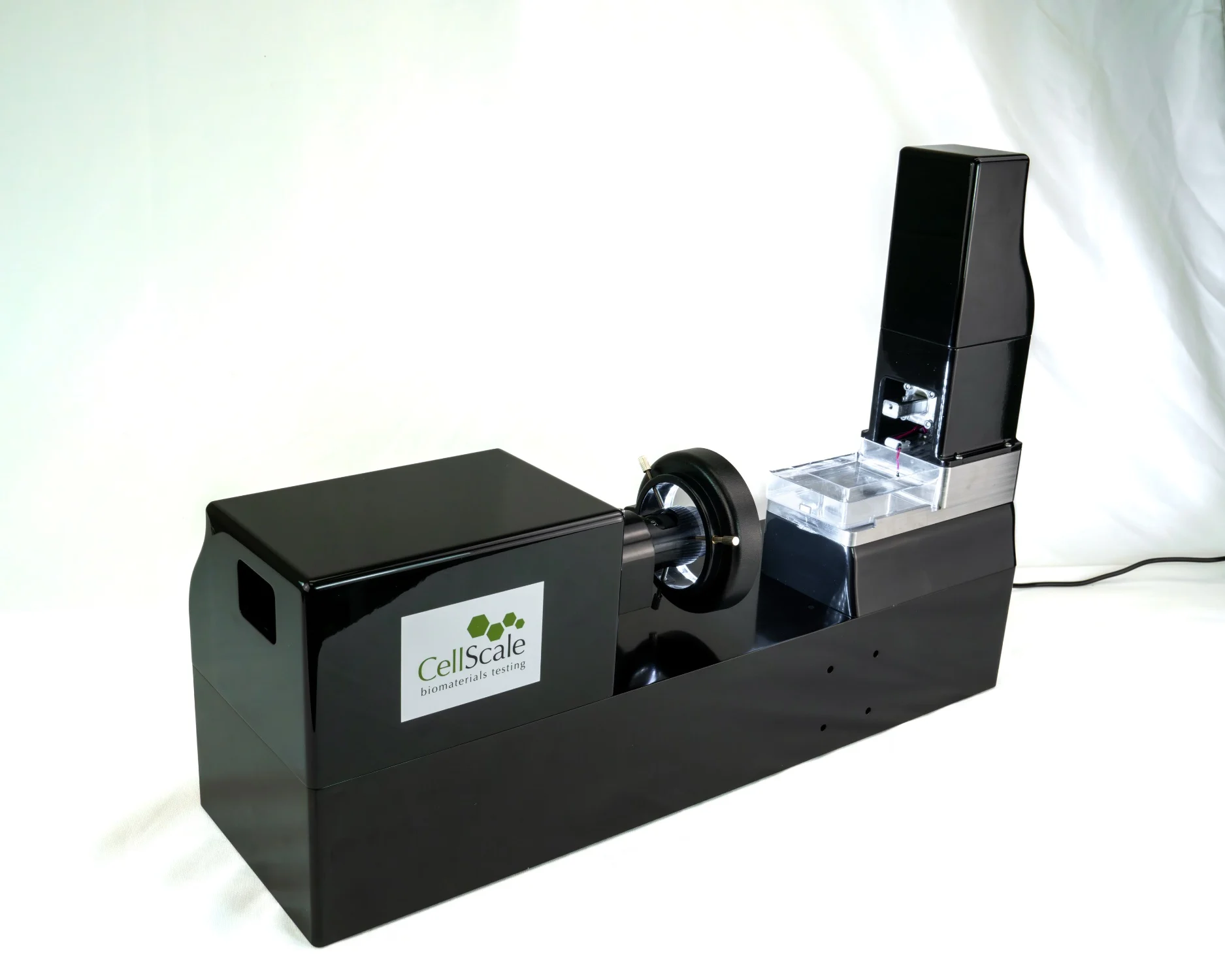
Suitable for micro-scale dermal layers, thin engineered constructs, and early stage wound healing models requiring low force resolution.
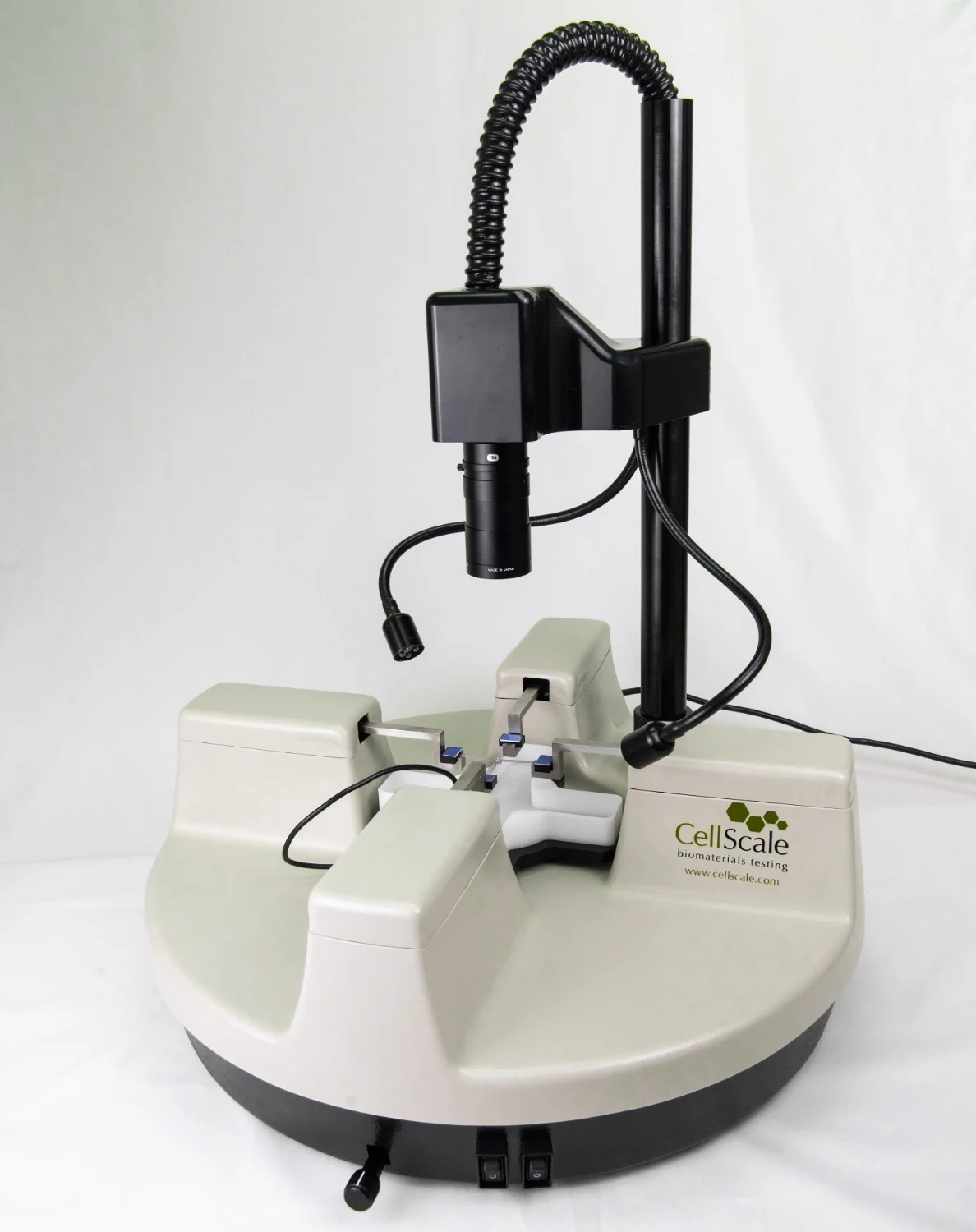
BioTester
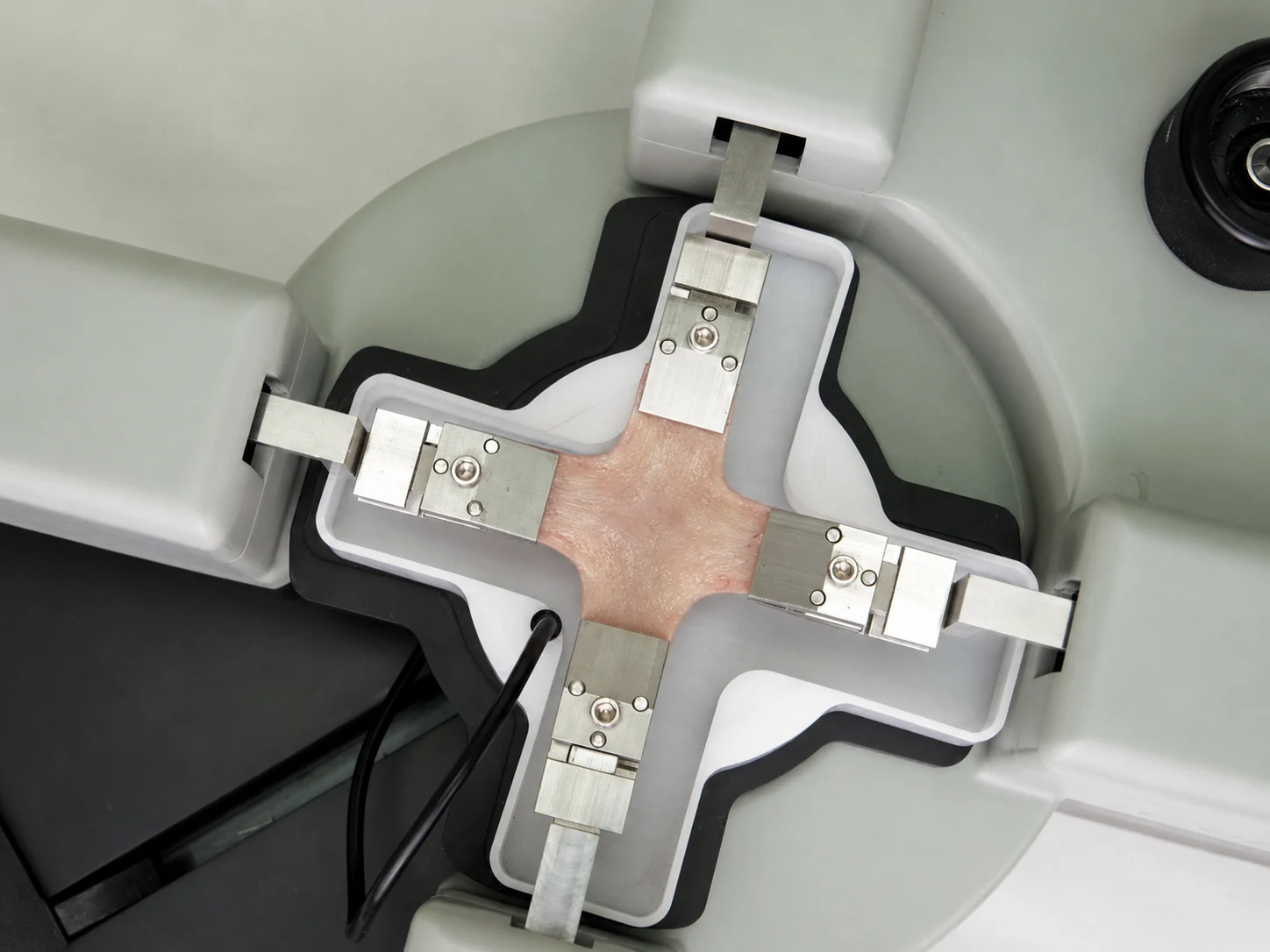
Provides planar and biaxial testing for full thickness skin samples or tissue engineered membranes where in-plane anisotropy is important.
Testing Methods Used in Skin and Wound Healing
Evaluates load dissipation and viscoelastic response
Assesses dermal elasticity and deformation
Characterizes sliding resistance and tissue attachment
Quantifies interfacial adhesion strength
Captures anisotropic mechanics of planar skin tissues
Representative Sample Types
Native tissues
- Dermal strips
- Full thickness skin
- Excisional wound models
- Scarred tissue or remodeled dermis
Engineered materials
- Collagen-based dermal scaffolds
- Electrospun skin substitutes
- Hydrogels for wound healing
- Bilayer engineered skin equivalents
Mechanobiology models
- Fibroblast seeded hydrogels
- Stretch-induced wound healing models
- Matrix remodeling studies
Relevant Peer-Reviewed Publications in Dermal Tissue Engineering

Advance Your Research in Skin Biomechanics
Our mechanical testing systems support native skin, engineered tissue, and wound healing studies. Contact our team to identify the right configuration for your application.
