CellScale instruments were built for delicate biomaterials testing, but they also make it easy to explore simple material questions with familiar household items.
In this case, we put toilet paper strength analysis to the test with a light, informal comparison between two widely recognized brands in Canada: Costco and Charmin. It was a simple toilet paper tensile test, using a single ply from each sample to compare stiffness and failure behaviour under tension.
This was not a standardized consumer test, just a fun demonstration of basic tensile testing principles using an everyday material.
If you want more background on the method itself, see our page on Tensile Testing.
How the toilet paper strength analysis was set up
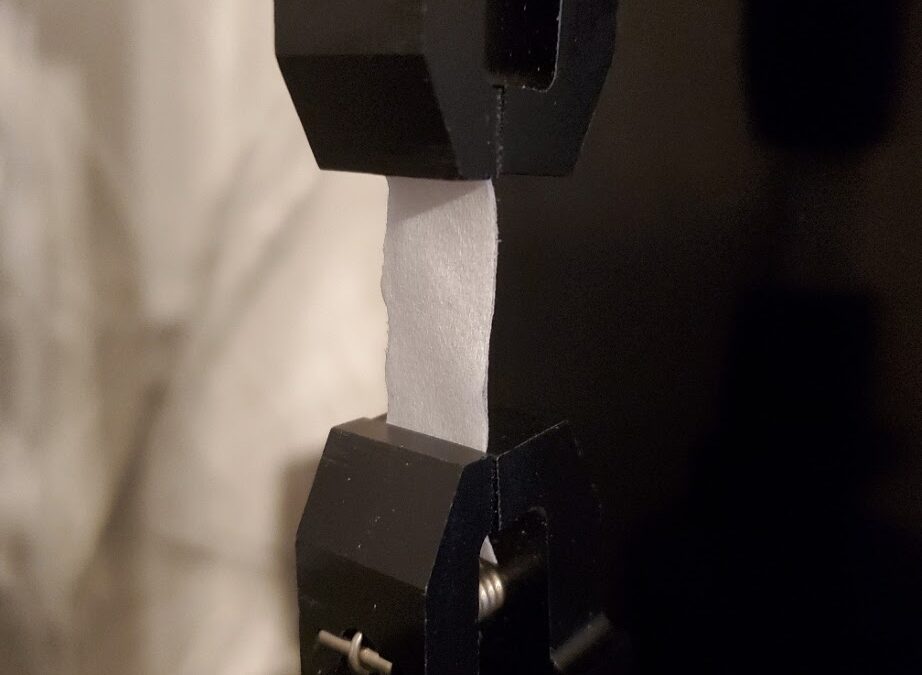
For this toilet paper strength analysis, a single ply from each brand was mounted in the CellScale UniVert and pulled in tension. Even with a soft, lightweight material like toilet paper, the basic method is the same as in many research tests: grip the specimen carefully, apply controlled extension, and record force and displacement as the sample stretches and fails.

Because the material is delicate, specimen handling matters. A test like this works best when the sample is mounted gently enough to avoid grip damage before the real loading even begins. That is one reason even a playful toilet paper strength analysis can still say something useful about test setup and repeatability.
If you want to learn more about the instrument used here, visit the UniVert product page.
What the toilet paper strength analysis measured
The key output from this toilet paper strength analysis was the stress-strain response of each sample. Once the data were plotted, it became possible to compare how the two materials behaved mechanically rather than just describing one as feeling stronger or softer by hand.
That is one reason tensile testing is so useful. It turns a subjective comparison into a measured one. In this case, the graph showed how stiffness and ultimate strength differed between the two toilet paper brands.
Interpreting the stress-strain curve
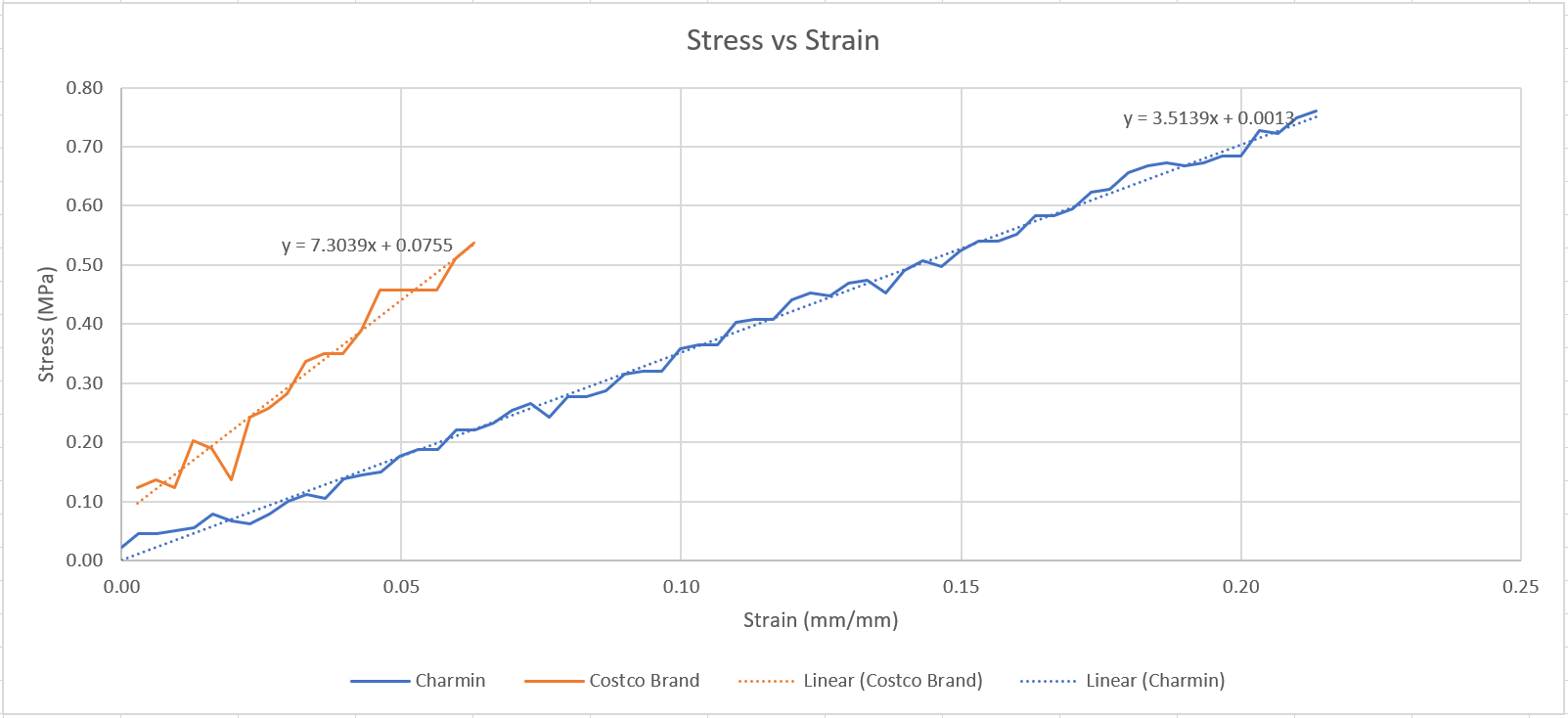
In the graph, stress was plotted against strain. From the linear portion of the curve, Young’s modulus was estimated. A steeper slope means a stiffer material, so the brand with the higher modulus resisted stretching more strongly in the early part of the test.
In this toilet paper strength analysis, the Costco sample appeared stiffer than the Charmin sample, based on the steeper slope of the curve. At the same time, it failed at a lower ultimate stress. That is a good reminder that stiffness and failure strength are not always the same thing. A sample can resist early deformation more strongly and still fail sooner under continued loading.
Why this kind of demo is still useful
A playful toilet paper strength analysis is obviously not the same as a formal materials study, but it still helps illustrate a few real ideas:
-
how a tensile test is set up
-
how stress-strain data are interpreted
-
how Young’s modulus relates to stiffness
-
how two materials can differ in both stiffness and failure behaviour
Final takeaway
This toilet paper strength analysis was done for fun, but the method behind it is real. A simple tensile test can still reveal meaningful differences in stiffness and failure behaviour, even in something as ordinary as a single ply of toilet paper.
If you want to see more approachable testing demos, explore our other Company News & Events posts.