Mechanical testing of biomaterials is different from testing metals, plastics, and other manufactured materials because biomaterials are often soft, fragile, heterogeneous, anisotropic, and highly sensitive to their environment. For students, researchers, and engineers working with soft tissues, hydrogels, scaffolds, or other biologically derived materials, these differences directly affect how specimens should be gripped, loaded, imaged, and maintained during testing.
While manufactured materials are often tested for strength, durability, and long-term stability under standardized conditions, biomaterials usually require more specialized testing methods. Their properties can change with hydration, temperature, loading direction, strain rate, and sample geometry. As a result, mechanical testing of biomaterials often demands more careful specimen handling, more sensitive force measurement, and more physiologically relevant test conditions.
Why Biomaterials Are Mechanically Different
Biomaterials often behave in ways that are not well captured by conventional materials testing approaches. Many are compliant rather than rigid, structurally complex rather than uniform, and responsive to environmental conditions rather than stable across a wide range of test settings.
A synthetic plastic coupon may be easy to machine into a repeatable geometry and grip firmly without damage. A soft tissue sample or hydrogel construct may tear during mounting, dehydrate during setup, or produce different results depending on orientation or local structure. This is why biomaterial mechanical testing must be designed around the specimen, rather than simply applying methods developed for metals or bulk polymers.
Challenges in Mechanical Testing of Biomaterials
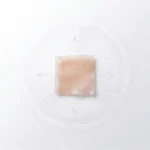
Soft and fragile specimens
For achieving optimal solutions, one could explore various alternatives to enhance performance. For instance, utilizing sandpaper-coated grips can significantly increase friction, thereby improving the overall grip. Additionally, implementing a multipoint puncture fixation method can ensure a secure hold, providing stability in various conditions. Another effective approach is clamping to firmly attached tabs, which enhances stability and control. Each of these methods offers unique advantages that can be tailored to meet specific task requirements, ultimately optimizing the outcome.

Heterogenous structure
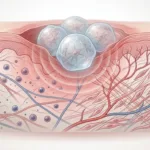
Variations in biomaterial stiffness and strength may differ within a specimen, impacting its mechanical properties at different points. These variations can play a crucial role in the overall behaviour of the material. By utilizing sophisticated techniques such as image-based strain analysis, researchers can precisely quantify local strains in the material. This detailed analysis provides valuable insights into how the material behaves under different conditions, aiding in the evaluation of its overall performance and potential applications.

Small and limited samples
Metal and plastics are commonly prevalent materials, easily accessible for various applications. However, when it comes to biological tissues, their limited availability can present challenges. This scarcity highlights the critical need for precise control over force and displacement, particularly when dealing with smaller tissue samples. Achieving the necessary accuracy in manipulating these delicate structures is paramount for conducting successful research experiments or performing intricate medical procedures. The ability to navigate these intricacies effectively can significantly impact the outcomes of such endeavors.

Anisotropic behaviour
Anisotropic materials are substances that display distinct physical properties depending on the direction they are measured. This contrasts with isotropic materials, which exhibit uniform characteristics regardless of orientation. The study of anisotropy is crucial in fields such as physics, engineering, and materials science as it enables experts to anticipate and assess how materials will behave in a wide range of scenarios and environmental conditions. By delving into the complexities of anisotropic behaviour, researchers can unravel the intricate nature of material properties and their implications across various applications and industries.

Geometrically complex specimens
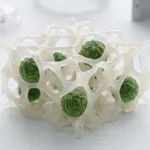
Geometrically complex shapes, with their multitude of angles, curves, and symmetrical attributes, offer a visually captivating experience that intrigues the eye. The interplay of intricate patterns and formations within these shapes not only adds to their allure but also poses an intriguing challenge for biotesting methodologies. The detailed analysis required to decipher the complexities of these shapes provides a unique opportunity to delve into the depths of their structure and functionality.

Environmentally sensitive behaviour
Being environmentally sensitive is crucial across numerous fields. When conducting tests under controlled temperatures, it is imperative to consider a multitude of factors beyond mere temperature. Factors such as hydration levels, pH balance, salinity, and the evolution of properties over time all contribute significantly to the outcomes. Taking into account these nuanced aspects is pivotal for guaranteeing precise and dependable results across a diverse a rray of testing scenarios.

Selecting the Right Testing Methods for Biomaterials
Choosing the right testing method depends on the material type, geometry, intended application, and research question. Several common methods are particularly relevant in biomaterial mechanical testing.
Tensile testing
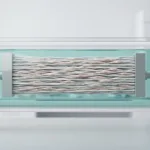
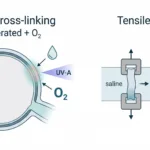
Tensile testing is useful when the goal is to measure stiffness, strength, elongation, or failure behaviour under uniaxial tension. It is commonly used for soft tissues, membranes, films, electrospun scaffolds, and engineered constructs that experience tensile loading in use.
For biomaterials, tensile testing often requires careful grip selection, low-force sensing, and sometimes optical strain measurement to avoid errors caused by grip slip or sample compliance.
Compression testing
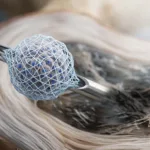
Compression testing is often used for hydrogels, foams, cartilage-like materials, porous scaffolds, and bulk soft biomaterials. It is especially useful when the material is difficult to grip in tension or when the intended application involves compressive loading.
Because many biomaterials are viscoelastic, compression protocols may include stress relaxation, creep, cyclic loading, or controlled strain-rate experiments to better reflect real mechanical behaviour.
Biaxial testing
Biaxial testing is valuable for biomaterials that experience multi-directional loading in vivo, such as cardiovascular tissues, membranes, and thin soft tissue structures. Testing in two directions at once can provide a more realistic picture of anisotropy and physiologic mechanical response than uniaxial loading alone.
This method is particularly useful when material behaviour depends strongly on fiber orientation or when loading in one axis influences deformation in another.
Hydrated and temperature controlled testing
Hydrated and temperature controlled testing is important for soft tissues, hydrogels, bioinks, and many tissue-engineered materials whose properties depend on fluid content and thermal condition. Maintaining hydration and temperature during testing can improve relevance, consistency, and reproducibility.
This method is especially important when researchers want to compare results to physiological behaviour or evaluate how a biomaterial will perform in a biologically relevant environment.
Why Biomaterial-Specific Testing Matters
Mechanical testing of biomaterials is not just a softer version of conventional materials testing. Biomaterials present their own experimental challenges, from delicate gripping requirements and anisotropic structure to environmental sensitivity and irregular geometry. These factors influence everything from fixture design to data interpretation.
Using the right testing method and the right test conditions helps researchers generate results that are more accurate, more reproducible, and more relevant to real biological performance. Whether the material is a hydrogel, soft tissue, scaffold, membrane, or engineered construct, biomaterial-specific mechanical testing is essential for understanding how it will behave in research, development, and application.
To learn more, explore related resources on tensile testing, compression testing, biaxial testing, and hydrated mechanical testing.