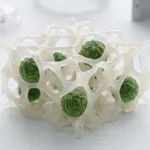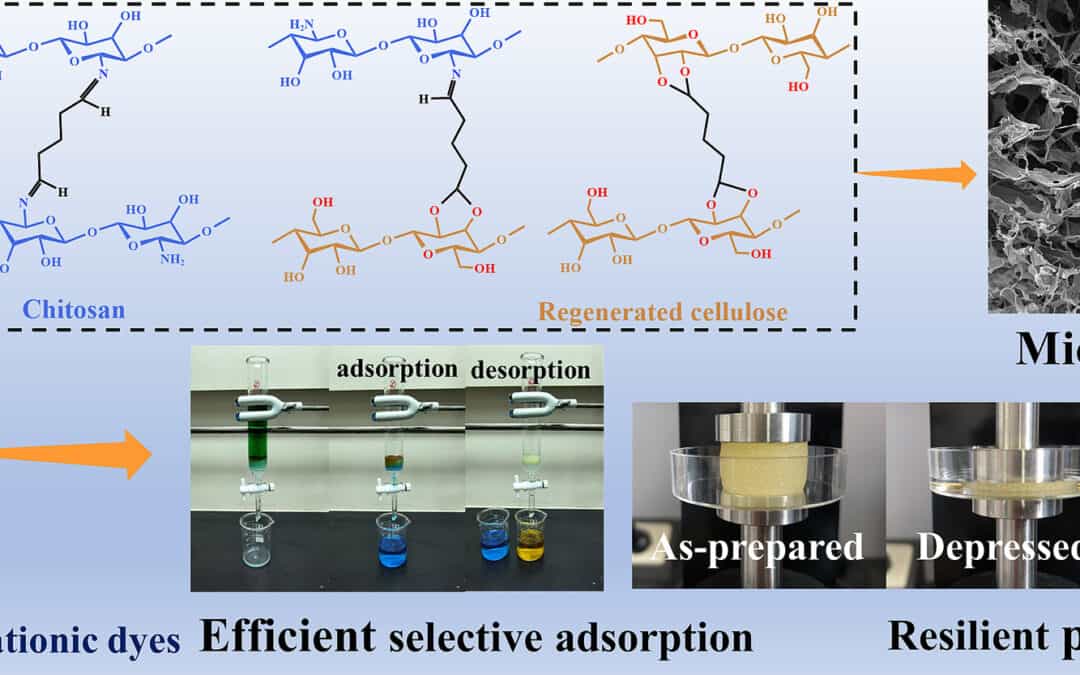
Chitosan zeolite aerogel materials are gaining attention in wastewater treatment because they combine high adsorption capacity with a lightweight, porous structure that can support efficient contaminant removal. In particular, these composite aerogels show strong potential for removing toxic anionic dyes from wastewater, an important challenge in environmental remediation and industrial water treatment.
For this type of material, adsorption performance is only part of the story. A chitosan zeolite aerogel must also maintain structural stability during use. Mechanical loading during handling, fluid exposure, adsorption cycles, and regeneration can affect whether the aerogel remains intact and functional. This makes mechanical testing of aerogels an important part of evaluating their suitability for real wastewater treatment conditions.

Why Chitosan Zeolite Aerogel Matters in Wastewater Treatment
A chitosan zeolite aerogel combines the benefits of two highly relevant materials. Chitosan contributes active chemical functionality that can interact with contaminants, while zeolite can improve adsorption efficiency and structural performance. Together, these materials create a porous composite that is well suited to dye adsorption applications.
In wastewater treatment, toxic anionic dyes are a major concern because they can persist in water systems and harm both ecosystems and human health. Materials with high surface area, accessible adsorption sites, and appropriate chemical interactions are valuable for addressing this problem. A chitosan zeolite aerogel offers that combination while also introducing a mechanically lightweight structure that can be tailored for use in filtration and adsorption systems.
Mechanical Stability of Aerogels During Adsorption
One of the most important practical questions is whether a chitosan zeolite aerogel can maintain its structure during adsorption and reuse. Aerogels are highly porous, which is one of the reasons they perform well as adsorbents. However, that same porosity can also make them mechanically fragile.
This is why mechanical testing of aerogels should be introduced early in the discussion rather than treated as a secondary detail. During adsorption, an aerogel may experience:
-
compressive loading during handling or packing
-
deformation during wetting and fluid exposure
-
structural changes during adsorption cycles
-
damage during regeneration and reuse
If the material collapses, cracks, or loses pore structure, adsorption performance may decline even if the chemistry remains favorable. For this reason, the mechanical stability of aerogels during adsorption is essential to long-term function.
Why Mechanical Testing of Aerogels Matters
A chitosan zeolite aerogel may perform well in adsorption experiments, but practical implementation depends on whether the material can survive real use conditions. Mechanical testing of aerogels helps researchers determine whether the structure can withstand loading without excessive deformation or breakage.
For porous materials like aerogels, compression testing of aerogels is especially important because it helps evaluate:
-
stiffness and deformation behaviour
-
resistance to structural collapse
-
recovery after loading
-
suitability for repeated use
-
stability in packed or handled configurations
This type of testing is relevant because porous adsorbents are often more mechanically delicate than dense bulk materials. Micro-scale compression testing can reveal how an aerogel responds to load while preserving sensitivity to the low-force behaviour that matters for fragile structures.
Compression Testing of Aerogels
For a chitosan zeolite aerogel, compression testing is a practical way to assess whether the material can tolerate the mechanical demands of wastewater treatment workflows. Compression testing can be used to measure how much force the aerogel can withstand before substantial deformation or damage occurs.
In this research context, CellScale’s MicroTester G2 is relevant because it supports micro-mechanical testing of delicate materials where precise force and displacement control are important. For fragile porous materials, micro-scale compression testing matters because:
-
the force range must match low-strength materials
-
small deformations may carry meaningful structural information
-
the material may fail before larger conventional test frames can capture useful detail
-
the response of the pore network can be highly sensitive to low applied loads
This is a strong example of why instrument sensitivity matters in materials research. A chitosan zeolite aerogel is not simply being tested for ultimate strength. It is being evaluated for whether its structure remains usable under application-relevant conditions.
Adsorption Performance of Chitosan Zeolite Aerogel
The adsorption performance of a chitosan zeolite aerogel comes from its porous structure, high surface area, and chemically active sites. Chitosan contributes functional groups that can interact with anionic dyes, while zeolite enhances adsorption characteristics and may support broader pollutant capture behaviour.
This makes the material attractive for aerogel adsorption for dye removal, especially where rapid and efficient removal of toxic dye molecules is required. In these systems, adsorption behaviour is often evaluated using isotherm models and kinetic analysis.
Adsorption Isotherms and Kinetics
Understanding how a chitosan zeolite aerogel behaves during adsorption requires both equilibrium and rate-based analysis.
Adsorption isotherms
Adsorption isotherms describe how much dye is retained by the aerogel at equilibrium under different concentrations. Models such as the Langmuir isotherm are often used to estimate adsorption capacity and assess how the material interacts with contaminants.
Adsorption kinetics
Kinetic models help researchers understand how quickly the material removes dye from solution. In many dye adsorption studies, pseudo-second-order kinetics are used to describe behaviour where adsorption capacity and active site interaction are important to the removal process.
These analyses help establish the efficiency of a chitosan zeolite aerogel, but they are strongest when paired with mechanical characterization. High adsorption performance is more meaningful when the material also maintains usable structure.
Influence of Solution Conditions on Performance

The adsorption behaviour of a chitosan zeolite aerogel can be influenced significantly by solution conditions. Factors such as pH and dye concentration affect how strongly the material interacts with anionic dye molecules.
Solution pH
Changes in pH can alter the charge state of active groups in the aerogel, which can increase or reduce attraction to dye molecules.
Initial dye concentration
Higher dye concentrations may increase the driving force for adsorption until active sites become saturated.
These variables are important for optimizing performance, but they can also affect the physical condition of the aerogel during use. This is another reason why mechanical testing of aerogels is valuable alongside chemical adsorption analysis.
Reusability and Regeneration
A major benefit of a chitosan zeolite aerogel in wastewater treatment is its potential for reuse. If the material can be regenerated effectively, it becomes more economically attractive and more sustainable.
However, regeneration introduces another mechanical question. Each reuse cycle may expose the aerogel to fluid movement, handling, desorption treatments, and structural stress. Over time, these effects may reduce pore stability or lead to mechanical degradation.
This means the long-term value of a chitosan zeolite aerogel depends not only on adsorption efficiency but also on whether the structure remains intact through repeated cycles. Compression testing of aerogels can help support this evaluation by showing how the material responds before and after use.
Environmental and Economic Relevance
A chitosan zeolite aerogel is attractive not only for technical reasons but also for broader sustainability goals. Materials based on abundant or renewable feedstocks can support environmental remediation strategies while reducing reliance on less sustainable alternatives.
From an economic perspective, a high-performing reusable adsorbent can lower treatment costs by reducing material consumption and extending operational lifespan. This is especially true when the material performs well chemically and mechanically.
In other words, a wastewater treatment aerogel becomes far more useful when its adsorption capacity is matched by adequate structural durability.
Why This Research Matters
This topic is a strong example of how materials science, environmental engineering, and mechanical characterization come together. A chitosan zeolite aerogel may be developed for dye removal, but its real value depends on more than adsorption data alone.
By combining aerogel adsorption for dye removal with mechanical testing of aerogels, researchers can evaluate both function and durability. That leads to better material selection, better design decisions, and more realistic assessment of application readiness.
For CellScale readers, this also highlights the importance of micro-mechanical testing for fragile porous materials. Instruments capable of precise low-force compression testing are especially useful when evaluating whether delicate structures can survive real application conditions.
Conclusion
A chitosan zeolite aerogel offers strong promise for toxic dye removal in wastewater treatment because of its high surface area, functional adsorption behaviour, and composite structure. At the same time, adsorption efficiency alone is not enough to determine whether the material is practically useful.
The mechanical stability of aerogels during adsorption is a critical part of performance evaluation. Through compression testing of aerogels and other forms of micro-mechanical testing, researchers can determine whether these porous materials maintain structural integrity during use, regeneration, and repeated loading. That combination of chemical and mechanical insight is what makes a material truly valuable for environmental applications.